COMPETENCY FRAMEWORKS
Make capability measurable.
Organizations cannot develop capability consistently when “good performance” means something different to every manager. BX designs competency frameworks that define what roles require, how proficiency develops and how that language connects to assessment, learning and performance.
What We Deliver
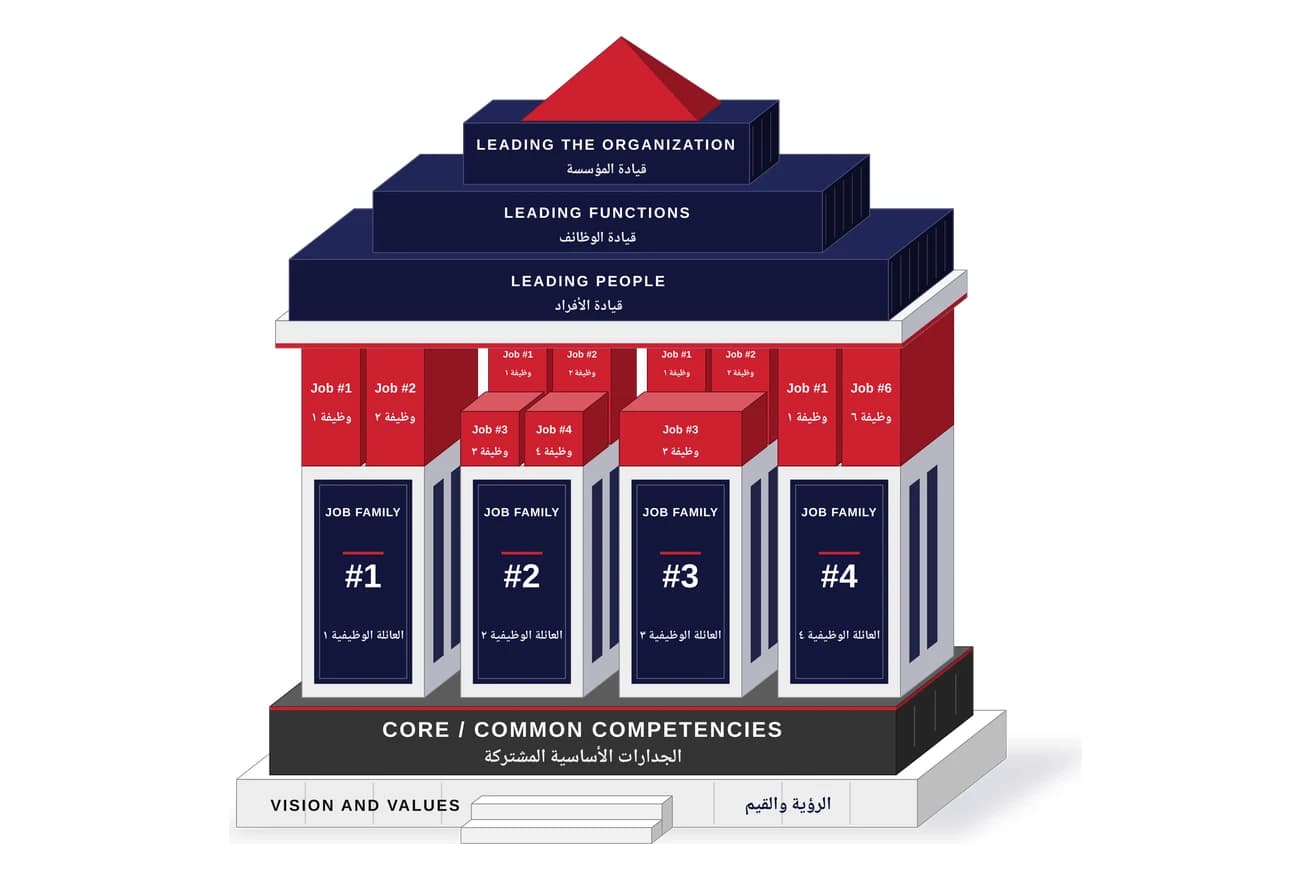
Competency architecture

Role and level mapping

Behavioral competency definitions

Technical / functional competency definitions

Proficiency or level logic where approved

Assessment linkage

Learning linkage

Performance linkage
How BX Works
Align
Confirm the business purpose of the framework and how it will be used.
Architect
Define competency families, categories and relationship to roles/levels.
Define
Write observable competency definitions and level expectations.
Map
Link competencies to jobs, role families or levels.
Connect
Design linkages to assessment, learning, talent and performance processes.
Govern
Establish ownership, review rules and version control so the framework remains current.
Related Capabilities
People, HR & Organizational Development
Growth becomes fragile when roles are unclear, structures no longer fit the work or people systems cannot support accountability.
Learning, Training & Education
Training creates more value when it starts with a real performance or capability need.
AI, Technology, Automation & Telecom
Technology should reduce friction, strengthen decisions and improve execution.
FAQs
What is a competency framework?
A competency framework defines the knowledge, skills, behaviors or functional capabilities expected for roles and levels, using a consistent language the organization can apply across people processes.
What is the difference between behavioral and technical competencies?
Behavioral competencies describe how people are expected to act or work; technical or functional competencies describe role-specific professional capability. Strong frameworks define both where the organization needs them.
Can the framework be linked to assessment?
Yes. The website scope explicitly positions assessment linkage as part of the competency-framework offering. The exact assessment method should be selected according to the role and purpose.
Can competency frameworks guide training plans?
Yes. Once competency expectations and gaps are defined, the framework can support more targeted learning priorities and competency-based learning paths.
How do you keep a competency framework from becoming outdated?
Ownership and governance matter. BX recommends clear review rules, version control and linkage to job architecture so the framework can evolve with roles and business priorities.
Discuss This Challenge With BX
If this challenge is limiting growth, clarity or execution, bring us the context. We will help structure the next move.